

When several drains slow down, gurgle, or back up at the same time, the problem is often different from one clogged sink. Multiple affected fixtures may share a branch drain or connect to the same building sewer, so continuing to run water can push more wastewater toward the restriction. The safest first response is to stop unnecessary water use, protect people from contaminated water, and record which fixtures are involved.
You do not need to diagnose the pipe yourself. The pattern of symptoms helps a plumber decide where to begin, but clearing equipment, camera inspection, and repair decisions should follow an assessment of the plumbing layout and pipe condition.
Why several clogged drains deserve attention
A single slow bathroom sink may have hair or soap buildup near that fixture. A kitchen sink that drains poorly may have grease or food residue in its branch line. When a toilet, tub, shower, floor drain, or laundry standpipe changes at roughly the same time, the restriction may be farther downstream where those drain paths meet.
The lowest fixture often shows trouble first because backed-up water follows the easiest available opening. In a basement, that may be a floor drain or utility sink. On the main level, wastewater may appear in a tub or shower when a toilet is flushed or a washing machine discharges. The first place water appears is an important clue, but it does not by itself identify the exact damaged or blocked section.
Warning signs of a shared drain or sewer restriction
- Two or more fixtures drain more slowly than usual.
- A toilet bubbles or changes water level when a nearby sink or shower is used.
- Water rises in a tub, shower, or floor drain after another fixture discharges.
- Gurgling occurs in fixtures that are not currently being used.
- A clog returns soon after plunging or ordinary cleaning.
- Sewage odor appears with drainage changes or visible wastewater.
- The lowest drain backs up during heavy household water use.
One symptom can have several possible causes. For example, gurgling can involve drainage or venting, while odor can come from a dry trap, a failed seal, or a sewer condition. Describe what you observe without assuming the cause.
What to do immediately
- Stop adding water. Pause showers, laundry, dishwashing, toilet flushing, and other avoidable use. Repeated testing can turn a partial restriction into an indoor overflow.
- Keep people and pets away from wastewater. Backed-up drain water can contain bacteria and other contaminants. Avoid direct contact and prevent tracking it through occupied rooms.
- Protect electrical safety. Do not enter standing water when outlets, appliances, extension cords, panels, or powered equipment may be involved.
- Document the pattern. Note the first affected fixture, the lowest drain, sounds, odors, water color, and which action makes the symptom worse.
- Contact the responsible property person. Tenants, condominium occupants, and commercial users may need to notify management before shared piping or cleanouts can be accessed.
What not to do
Do not keep flushing a toilet to see whether the blockage has cleared. Avoid running a washing machine or filling a tub as a test because those activities release a large volume of water. Do not open an exterior or basement cleanout when the line may be holding wastewater under pressure; removing the cap can release sewage into the area.
Do not mix drain chemicals, bleach, acids, or other cleaners. Chemical combinations can create heat or toxic gas, damage some plumbing materials, and leave hazardous liquid in the line where a plumber must work. Tell the provider about any product already used, including the approximate amount and time.
Common causes a plumber may consider
Accumulated waste, grease, wipes, paper products, hair, soap residue, or foreign material can restrict flow. Roots may enter through a damaged joint. Older pipe can develop corrosion, scaling, cracks, offsets, or low areas that hold debris. Construction material may enter a drain during remodeling. In some properties, the issue may involve a shared building line or a public sewer rather than one private fixture.
The symptom pattern narrows the search, but major repair should not be selected from symptoms alone. A line that needs clearing is different from a line with structural damage, and the appropriate response depends on access, material, location, and condition.
How a plumber may diagnose the problem
The assessment commonly begins with questions about timing and fixture relationships. The plumber may identify which fixtures share a branch, inspect accessible traps or cleanouts, and observe how water moves through the system. Clearing may be necessary before the pipe can be evaluated properly.
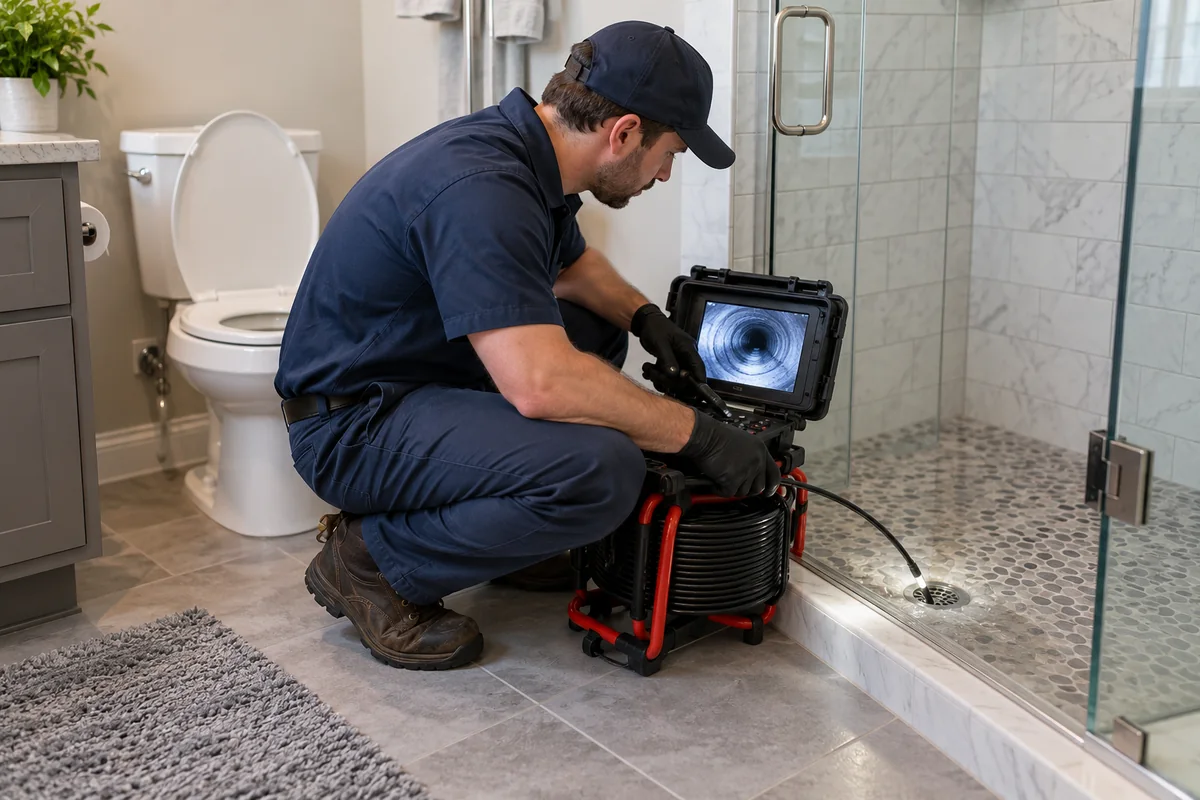
A sewer camera can help locate roots, cracks, offsets, or recurring buildup after enough flow is restored for the lens to travel and see. A camera cannot always identify the nature of an active blockage when the lens is submerged or obstructed. Location equipment may help estimate where a visible defect lies, but excavation or replacement decisions still depend on site conditions and an agreed scope.
Drain clearing, cleaning, and repair are different
Clearing creates a path through an obstruction. More thorough cleaning may remove buildup from a larger portion of the pipe when the material and condition allow it. Repair addresses a damaged pipe, failed joint, root entry point, improper section, or another physical defect. One service does not automatically include the others.
Ask what method is proposed, which section will be worked on, how success will be checked, and what evidence supports any recommended repair. If a temporary opening is restored but the condition is likely to return, ask what follow-up inspection or maintenance is appropriate.
When several clogged drains become urgent
Seek prompt help when sewage enters an occupied room, wastewater continues rising, the property has no usable toilet, or water threatens electrical or heating equipment. Stop water use throughout the affected portion of the building. A public manhole overflow or widespread neighborhood sewer issue should also be reported to the appropriate utility.
If only one fixture is slow and there is no overflow, the request may be less urgent, but recurring symptoms still deserve attention. Waiting until every fixture backs up can increase cleanup and property damage.
Information to provide when calling
Give the complete address and property type. List each affected fixture and floor, explain which one showed symptoms first, and mention whether wastewater is visible. State whether the problem follows toilet flushing, showers, laundry, kitchen use, or heavy rain. Share any history of clearing, camera inspection, root treatment, pipe repair, or remodeling.
Also explain how a cleanout, basement, crawlspace, utility room, or shared area can be accessed. In a business, identify operating restrictions and the person authorized to approve work. Clear information helps the provider prepare without promising a diagnosis before inspection.
Reducing the chance of another blockage
Keep wipes, hygiene products, paper towels, grease, food scraps, and other unsuitable material out of drains and toilets. Use strainers where appropriate and address recurring slow flow rather than relying on repeated chemical treatment. Properties with a known history of roots or damaged piping may need a maintenance plan based on actual inspection findings.
Special considerations for apartments and shared buildings
In an apartment, condominium, hotel, or multi-tenant property, fixtures in different units may connect to a shared stack or building drain. A symptom inside one unit can originate upstream or downstream from that space. Notify the property contact early, particularly when wastewater appears in a common area or more than one unit reports trouble.
Do not authorize work on a shared system unless you have the required authority. Give the provider unit numbers, floors, affected common areas, and access information for mechanical rooms or cleanouts. Coordinated access can reduce repeated testing and help distinguish private fixture piping from a building responsibility.
Cleanup after wastewater backs up
Restoring drainage does not automatically make contaminated surfaces safe. Keep occupants away until affected materials and spaces have been evaluated and cleaned appropriately. Porous flooring, drywall, insulation, furnishings, and stored items may require different treatment from hard surfaces. Extensive contamination may require a qualified remediation provider in addition to plumbing work.
Photograph visible conditions when it is safe, and keep records of the plumbing assessment, cleanup, and repairs. Avoid using fans that could spread contamination before the area has been evaluated. If wastewater reached heating, cooling, or electrical equipment, have the appropriate professional assess that equipment before operation.
Questions to ask before approving service
- Which fixture group or pipe section appears to be restricted?
- Is the proposed work intended to clear, clean, inspect, or repair the line?
- What access point will be used, and is any finish removal expected?
- How will normal flow be confirmed after the work?
- If damage is found, what evidence supports the repair recommendation?
- What is included in the estimate, and what conditions could change the scope?
Clear answers help separate immediate flow restoration from optional maintenance or permanent repair. Ask for authorization and pricing terms before work begins, especially when additional inspection may reveal a different condition.
Review drain-cleaning service information, learn how sewer-line problems are evaluated, or read the emergency plumbing safety guide when wastewater is entering the building.